
Introduction: The Next Generation of Blockchain Architecture
The blockchain industry is at an inflection point. Developers are tired of choosing between speed, security, and decentralization. Users demand real-time experiences without waiting for block confirmations. Enterprises need scalable infrastructure that actually works at Web2 speeds.
Pharos Network isn't just another blockchain. It's a fundamental reimagining of how blockchain architecture should work.
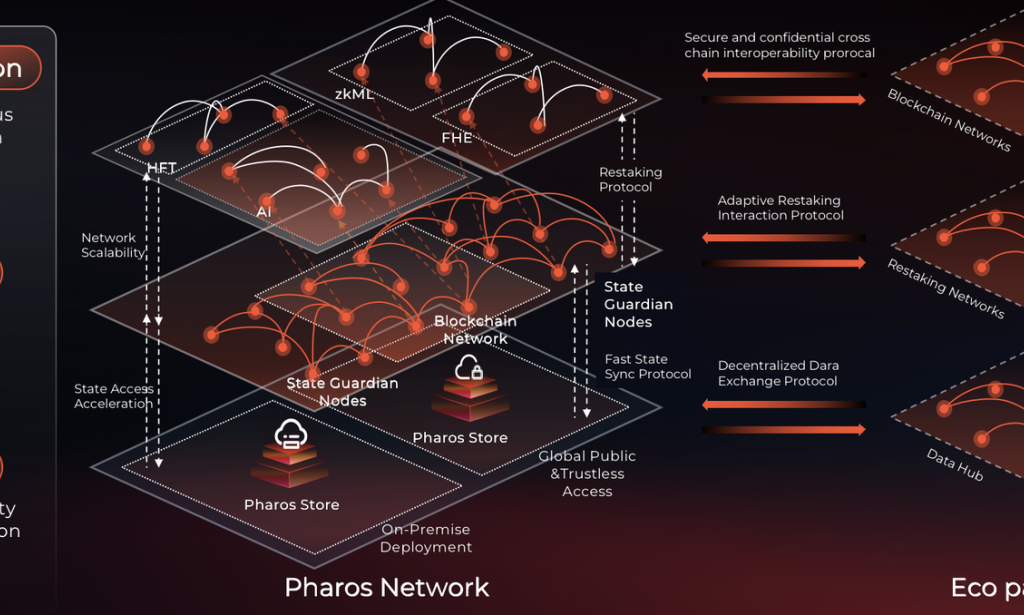
Unlike traditional monolithic blockchains that try to do everything at once, Pharos has designed a Modular & Full-stack Parallel L1 Blockchain Network structured into three primary layers: L1-Base, L1-Core, and L1-Extension.
This approach delivers something the blockchain industry has struggled with for years: true scalability without sacrificing security or decentralization.
But what makes Pharos different? And why should developers, investors, and blockchain enthusiasts care?
Part 1: Understanding Pharos Network Architecture
The Problem With Monolithic Blockchains
Bitcoin, Ethereum, and most traditional blockchains follow a monolithic design. Every node validates every transaction. Every node stores every state. Every application runs on the same execution layer.
This design has fundamental limitations:
- The Scalability Trilemma – You can optimize for two of three: decentralization, security, or scalability. But getting all three remains nearly impossible.
- Hardware Bottlenecks – The network's speed is limited by the slowest hardware in the network. You can't leverage specialized hardware for specific tasks.
- State Bloat – As the network grows, every node must store increasingly massive amounts of data. This centralizes the network because only high-powered hardware can participate.
- Single Point of Failure – If consensus or data availability breaks, the entire network breaks.
Pharos solves these problems through modularity.
Pharos Network: Three-Layer Architecture
Pharos is structured into three distinct layers, each optimized for specific functions:
Layer 1: L1-Base
What it does: Delivers industry-leading data availability and hardware acceleration.
Why it matters: Data availability is the foundation of blockchain security. If you can't verify that data exists, you can't verify the blockchain's integrity. Pharos optimizes this layer specifically for data availability, using specialized hardware and protocols to ensure reliable, fast data access.
Key features:
- Hardware Acceleration – Uses specialized hardware to dramatically improve data availability throughput
- Optimized Data Structure – Designed specifically for rapid verification and retrieval
- Parallel Processing – Processes multiple data streams simultaneously instead of sequentially
Layer 2: L1-Core
What it does: A high-performance, globally distributed blockchain network powered by decentralized nodes.
Why it matters: This is where transactions actually happen. L1-Core provides the consensus mechanism and execution layer. By separating this from data availability (L1-Base), Pharos can optimize each layer independently.
Key features:
- High-Throughput Processing – Handles thousands of transactions per second
- Sub-Second Finality – Transactions finalize almost instantly, enabling real-time Web3 experiences
- Global Distribution – Decentralized nodes spread across the world ensure no single point of failure
- Real-Time User Experience – Users don't wait for block confirmation. They experience instant finality.
Layer 3: L1-Extension
What it does: Built on top of L1-Core, this layer supports network expansion across three dimensions.
Why it matters: This is where Pharos becomes truly revolutionary. L1-Extension enables three game-changing capabilities:
1. Special Processing Networks (SPNs)
SPNs are custom processing networks built on top of Pharos using heterogeneous computation. They can run:
- Blockchain Networks – Dedicated blockchains for specific use cases
- Sidechains – Parallel chains for specialized applications
- Non-Blockchain Applications – High-Frequency Trading (HFT), Zero-Knowledge Machine Learning (ZKML), and AI models
This flexibility means developers can build exactly what they need instead of forcing their use case into a general-purpose blockchain.
2. Native Restaking
SPNs support native restaking, which enables:
- Rapid SPN Creation – Spin up new processing networks quickly
- Shared Security – New SPNs inherit security from the Pharos network
- Staking Rewards – Validators earn rewards for securing SPNs
- Slashing Mechanisms – Ensure validators behave honestly
Pharos utilizes the excess computing power of validators, providing flexibility in resource use while incentivizing hardware upgrades.
3. Cross-SPN Interoperation
SPNs can communicate and collaborate effortlessly, creating a highly modular and composable ecosystem. This means:
- Infrastructure SPNs can serve multiple applications
- Middleware SPNs can bridge different processing networks
- Application-focused SPNs can specialize in specific use cases
Together, these three dimensions create an ecosystem where different processing networks work together seamlessly.
Part 2: Pharos Ecosystem Architecture
Three Key Layers
Pharos isn't just about processing capacity. It's about creating a complete ecosystem that handles the full spectrum of blockchain operations.
Transaction Layer: Secure Cross-Chain Interoperability
The Transaction Layer facilitates secure, confidential, and efficient cross-chain asset and account interactions via the Secure and Confidential Cross-Chain Interoperability Protocol.
What this enables:
- Multi-Chain Asset Swaps – Move assets between different chains without worrying about security
- Cross-Chain Account Operations – Perform account actions across multiple chains as if they were one unified system
- Confidentiality – Transactions maintain privacy even when crossing chain boundaries
This is critical in a fragmented blockchain ecosystem where assets exist on multiple chains. Users shouldn't have to manually bridge assets between chains or deal with complex cross-chain logic. Pharos handles it transparently.
Consensus Layer: Adaptive Restaking Integration
The Consensus Layer integrates with external restaking protocols like Babylon and EigenLayer through the Adaptive Restaking Interaction Protocol.
What this enables:
- Shared Security – Pharos network security is enhanced by restaked assets from other protocols
- Liquidity – Restaked assets like stBTC and stETH can be used directly in the Pharos DeFi ecosystem
- Multi-Protocol Support – Integrates with multiple restaking protocols for flexibility
This is where Pharos taps into the rapidly growing restaking ecosystem. Instead of being a standalone network competing for security resources, Pharos leverages the security guarantees of established protocols like Bitcoin and Ethereum.
Data Layer: Decentralized Data Exchange
The Data Layer uses the Decentralized Data Exchange Protocol to synchronize and collaborate with external data centers, promoting innovative on-chain use cases like AI and Fully Homomorphic Encryption (FHE).
What this enables:
- On-Chain AI – Machine learning models that run verifiably on-chain
- Privacy-Preserving Computation – FHE enables computation on encrypted data
- Data Collaboration – Multiple data sources work together without revealing sensitive data
This layer is particularly important for emerging use cases like decentralized AI and privacy-preserving applications.
Part 3: The Pharos Modular Stack
Open-Source Infrastructure for Developers
Pharos provides a complete modular stack designed to support SPNs and L2/L3 systems. This isn't proprietary technology locked behind Pharos—it's open-sourced and available to partners and developers for scaling and customization.
What's included:
- L1 Consensus Engine – The core consensus mechanism that powers the network
- SPN Framework – Tools and libraries for building custom processing networks
- Cross-Chain Bridge – Infrastructure for secure interoperability
- Data Availability Layer – DAS-specific components
- Execution Framework – VM and state management systems
Why this matters:
Developers aren't forced to use Pharos as-is. They can:
- Fork and customize components for their specific needs
- Build L2/L3 chains on top of Pharos with custom logic
- Create specialized SPNs optimized for their use case
- Contribute improvements back to the ecosystem
Performance Benchmarks:
Performance benchmarks have been demonstrated on Geth (the popular Ethereum client). Future collaborations with ecosystem partners will drive continued development of Web3 infrastructure.
The modularity means developers can:
- Use Pharos components in their own projects
- Build optimizations for specific hardware
- Integrate with existing Web2 infrastructure
- Create hybrid Web2/Web3 applications
Part 4: Restaking Integration & Multi-Asset Support
The Power of Restaking
Restaking has emerged as one of crypto's most important innovations. It allows assets already securing one blockchain (like Bitcoin or Ethereum) to also secure other networks, creating a unified security model.
Pharos supports multi-asset restaking protocols to enhance security and liquidity, allowing seamless integration with:
- Babylon – Enables Bitcoin staking for Ethereum and other chains
- EigenLayer – The leading restaking protocol for Ethereum
- Future Protocols – More protocols will be added as restaking matures
How This Works in Practice
Example: A Developer Building on Pharos
A developer wants to build a high-frequency trading (HFT) SPN on Pharos. Here's what they get:
- Shared Security – The SPN inherits security from the Pharos L1, which itself is secured by restaked Bitcoin and Ethereum
- Economic Incentives – Validators are rewarded for securing both the main Pharos network AND the HFT SPN
- Hardware Optimization – The HFT SPN can use specialized hardware (CPUs optimized for low-latency trading) that wouldn't work for general-purpose computation
- Instant Finality – Transactions finalize in sub-seconds, critical for HFT where latency matters
- Cost Efficiency – By sharing infrastructure and security with other SPNs, the HFT SPN is cheaper to operate than a standalone chain
This is genuinely different from existing solutions. A developer building on other Layer-2 solutions gets a one-size-fits-all platform. On Pharos, they get specialized infrastructure optimized for their specific use case.
Part 5: Real-World Use Cases for Pharos Network
1. High-Frequency Trading SPNs
The Problem: Traditional blockchains are too slow for HFT. Consensus mechanisms introduce latency that destroys trading opportunities.
The Pharos Solution: Create a dedicated HFT SPN optimized for sub-millisecond latency. This SPN:
- Uses specialized hardware for order matching
- Settles trades on Pharos L1 in sub-seconds
- Shares security with the main network
- Connects to DeFi liquidity through cross-SPN interoperation
Result: Institutional-grade HFT on blockchain infrastructure.
2. Zero-Knowledge Machine Learning (ZKML)
The Problem: AI models running on-chain require massive amounts of computation, making them prohibitively expensive.
The Pharos Solution: Create an SPN dedicated to ZKML:
- Run AI inference using zero-knowledge proofs
- Prove model outputs are correct without revealing the model
- Enable privacy-preserving AI applications (medical diagnosis, credit scoring, etc.)
- Leverage Pharos's data layer for efficient data collaboration
Result: Private, verifiable AI on the blockchain.
3. Enterprise Blockchain Systems
The Problem: Enterprises need blockchain security and transparency but also need to control hardware, customize consensus, and maintain proprietary logic.
The Pharos Solution: Build a custom SPN that:
- Uses enterprise hardware infrastructure
- Implements custom consensus rules
- Connects to Pharos L1 for shared security and cross-chain interoperability
- Leverages the modular stack for rapid deployment
Result: Enterprise blockchains that retain network effects through Pharos interoperability.
4. Decentralized AI Networks
The Problem: Current decentralized AI systems lack verifiable computation and economic incentives.
The Pharos Solution: Create an AI SPN that:
- Hosts AI models with verifiable computation
- Pays model providers based on inference usage
- Enables collaborative training across multiple parties
- Protects data privacy through FHE
Result: A decentralized AI infrastructure layer accessible by anyone.
5. Real-World Asset (RWA) Networks
The Problem: Tokenizing real-world assets requires trusted data sources, custody, and compliance—difficult on a single blockchain.
The Pharos Solution: Create an RWA SPN that:
- Integrates with specialized custody providers
- Implements compliance rules specific to the asset class
- Provides oracle infrastructure for asset valuations
- Enables efficient settlement through cross-SPN interoperability
Result: Compliant, scalable RWA infrastructure.
Part 6: Why Pharos Network Matters for Web3
The Future of Blockchain Infrastructure
Pharos Network represents a fundamental shift in how blockchain infrastructure should work. Instead of forcing every application into the same mold, Pharos acknowledges that different use cases need different optimization parameters.
HFT needs: Low latency, specialized hardware, fast consensus AI needs: Compute-intensive operations, data collaboration, privacy RWAs need: Regulatory compliance, custody integration, data feeds Gaming needs: High throughput, sub-second finality, custom logic
Traditional blockchains force all of these into one system. Pharos lets each operate on specialized infrastructure while maintaining network effects through interoperability.
The Developer Experience
For developers, Pharos offers something genuinely rare: freedom without starting from scratch.
You're not forced to use the monolithic Pharos L1 if you need custom logic. Instead, you can:
- Create a specialized SPN with custom consensus rules
- Use open-source Pharos components as building blocks
- Fork and customize the modular stack
- Deploy in weeks instead of months
This dramatically lowers the barrier to creating specialized blockchain infrastructure.
The Security Model
Pharos's restaking integration creates a powerful security model:
- New SPNs and L2s inherit security from established protocols (Bitcoin, Ethereum)
- No need to bootstrap your own validator set
- Shared economic incentives across the ecosystem
- Instant interoperability with other secured networks
This is more secure and efficient than each application building its own blockchain.
The Ecosystem Effect
As more SPNs are created and cross-SPN interoperability improves, the Pharos ecosystem becomes increasingly powerful:
- Infrastructure SPNs serve as shared resources
- Middleware SPNs bridge different domains
- Application SPNs specialize in specific use cases
- Cross-SPN collaboration drives innovation
This creates a compounding effect where the network becomes more valuable as more applications build on it.
Part 7: Pharos vs. Existing Solutions
Pharos vs. Ethereum L2s
Ethereum L2s:
- Provide scaling through transaction batching
- Inherit Ethereum security directly
- Limited customization (EVM-based)
- Good for general-purpose applications
Pharos:
- Enables specialized SPNs optimized for specific use cases
- Scales horizontally (add more SPNs) vs. vertically (improve one chain)
- Full customization of consensus, execution, and data availability
- Better for specialized applications (HFT, AI, RWAs)
When to use Ethereum L2s: General-purpose applications that benefit from Ethereum's ecosystem
When to use Pharos: Specialized applications that need custom infrastructure
Pharos vs. Cosmos/IBC
Cosmos:
- Each chain is completely independent
- No shared security (each chain bootstraps its own)
- Interoperability through IBC bridge
- Good for completely custom blockchains
Pharos:
- SPNs share security and infrastructure
- Interoperability is native, not a bolt-on bridge
- Shared economic incentives
- Faster to deploy than bootstrapping a Cosmos chain
When to use Cosmos: When you need complete independence
When to use Pharos: When you want specialized infrastructure with shared security
Pharos vs. Traditional Rollups
Rollups (Arbitrum, Optimism):
- Execute transactions off-chain
- Submit batches to L1 for security
- Fast but limited customization
Pharos:
- Full L1 with native parallelism
- Sub-second finality (not dependent on L1 confirmation)
- Full customization through SPNs
- Better for latency-sensitive applications
Conclusion: The Infrastructure Layer of Web3
Pharos Network represents a fundamental evolution in blockchain infrastructure. By acknowledging that different applications have different needs and providing specialized infrastructure for each, Pharos enables a more efficient, more powerful Web3.
The modular architecture, combined with shared security through restaking and cross-SPN interoperability, creates an ecosystem where:
- Developers can build exactly what they need
- Users get optimal performance for their use case
- The network benefits from shared security and economic incentives
- Innovation accelerates through open-source components
The blockchain industry has been waiting for infrastructure that scales without compromises. Pharos Network delivers it.
Whether you're a developer building high-frequency trading platforms, an AI researcher deploying verifiable models on-chain, an enterprise adopting blockchain infrastructure, or a visionary building the next generation of Web3 applications, Pharos provides the infrastructure to make it real.
The future of Web3 isn't monolithic. It's modular. It's Pharos.

You must be logged in to post a comment.